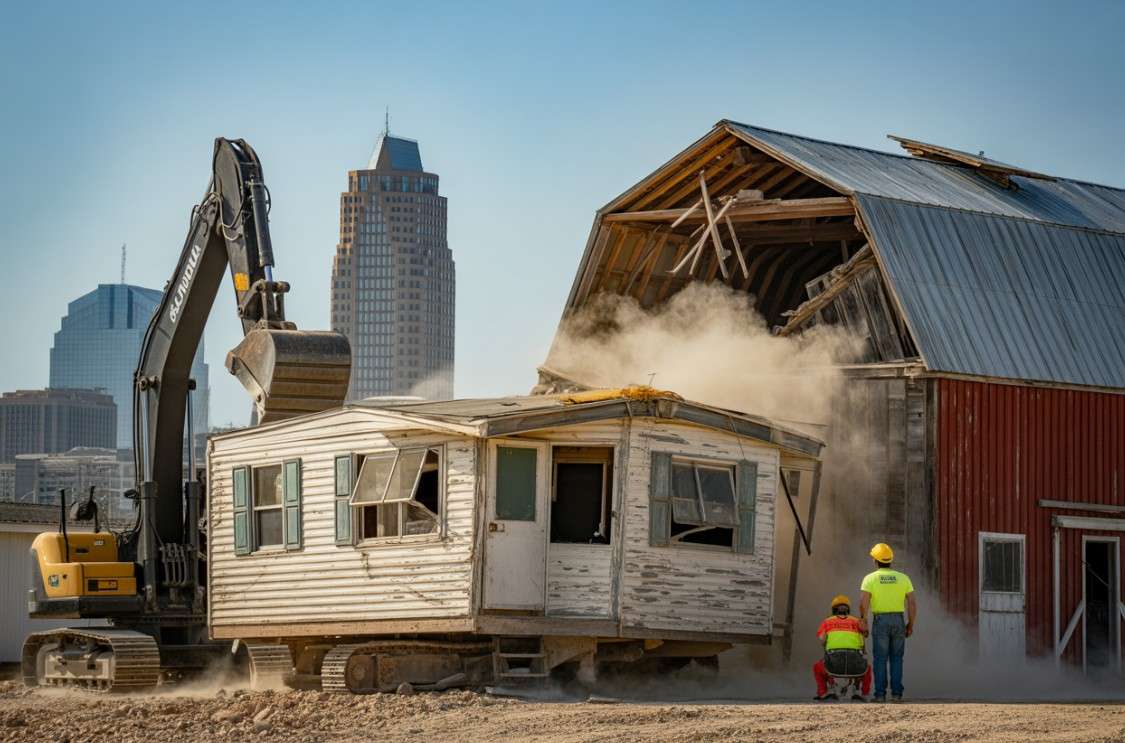
Property owners across San Antonio occasionally face situations requiring removal of structures that don’t fit the typical residential or commercial demolition categories. Mobile homes that have reached the end of their useful lives and old barns that have become safety hazards both present unique demolition challenges that demand different approaches than standard house or building removal. Understanding what makes these specialty structure demolitions distinct helps property owners plan appropriately and recognize why contractors experienced in this work bring value that goes beyond simply knocking down whatever stands on a property.
The common thread connecting mobile home and barn demolition is that both involve structures built differently than conventional site built homes or commercial buildings. Mobile homes feature steel frame chassis, lighter construction methods, and materials designed for transportability rather than permanent placement. Barns use agricultural building techniques that vary widely based on age and purpose, ranging from simple pole barn construction to substantial timber frame structures. These construction differences affect how demolition proceeds, what equipment works best, and how debris gets handled after structures come down.
Mobile Home Demolition Challenges and Considerations
Mobile homes, also called manufactured housing, served as affordable housing options for decades across San Antonio and surrounding areas. Many of these homes were placed on properties in the 1970s and 1980s and have now deteriorated to the point where removal makes more sense than continued maintenance or repair. Unlike site built homes that rest on permanent foundations, mobile homes sit on steel chassis with wheels and axles that were used to transport them to current locations. This underlying frame affects demolition approaches and creates material handling considerations that don’t exist with conventional homes.
The construction methods used in mobile homes differ fundamentally from site built residential construction. Walls are typically thinner with less substantial framing. Roofs often use lighter materials and simpler truss designs. Floor systems attach to the steel chassis rather than sitting on foundations. Exterior siding might be metal, vinyl, or other materials that require different handling than wood or brick. These lighter construction methods mean mobile homes come apart more easily than conventional homes but also create more debris volume relative to structure size because materials don’t have the density and mass that standard residential construction features.
Manufactured homes often have additions or attached structures built after initial placement. Porches, carports, storage rooms, and sunrooms get added over years of occupancy. These additions might be built using conventional construction methods and attached to the manufactured home in ways that create structural connections requiring careful separation during demolition. Understanding what’s manufactured home and what’s site built addition helps contractors plan appropriate removal approaches for each component.
The steel chassis and running gear beneath mobile homes have scrap value that makes separation and recovery worthwhile. Axles, wheels, frame rails, and tongue assemblies contain substantial metal that scrap yards will purchase. Professional mobile home demolition in San Antonio includes separating these metal components from other debris, sizing them appropriately for scrap yard acceptance, and hauling them for recycling. This metal recovery offsets some demolition costs while keeping materials out of landfills.
Utility disconnection for mobile homes follows similar requirements as site built homes. Electric, gas, and water services all need proper disconnection before demolition proceeds. The connections might differ slightly from conventional homes because mobile homes use different hookup methods, but the safety imperatives and regulatory requirements remain the same. Contractors experienced with manufactured housing understand these connection variations and handle disconnections appropriately.
The debris from mobile home demolition includes mixed materials that generally aren’t recyclable. Thin wall panels, insulation, flooring, and various synthetic materials used in manufactured housing construction go to construction debris facilities or landfills rather than recycling operations. The exception is the metal chassis and any metal siding or roofing that gets separated for scrap. Understanding debris composition helps estimate disposal costs and plan appropriate hauling capacity for complete removal.
Barn Demolition Complexities and Safety Concerns
Old barns scattered across San Antonio area properties represent agricultural heritage but often become safety hazards as they age and deteriorate. These structures range from simple pole barns with metal roofing to substantial timber frame barns built with traditional joinery techniques. The variety in barn construction means each demolition requires individual assessment and planning rather than applying standard approaches that work for one barn to all situations.
Structural instability is the defining characteristic of many barns requiring demolition. Years or decades of exposure to weather, inadequate maintenance, and sometimes damage from storms have compromised structural integrity to the point where barns are actively dangerous. Roofs sag or have partially collapsed. Walls lean at alarming angles. Floor systems have rotted through. These conditions create serious hazards for anyone entering structures or attempting demolition without appropriate precautions and experience.
Barn demolition safety requires constant awareness that structures might collapse unpredictably. Contractors experienced in this work assess stability carefully before any personnel or equipment get close to buildings. They identify which structural elements are most compromised and plan removal sequences that prevent sudden collapses. Sometimes barn demolition happens entirely from outside structures using equipment with extended reach rather than risking workers entering unstable buildings. This cautious approach takes more time but prevents the injuries that hasty demolition of compromised structures can cause.
The materials in old barns sometimes have salvage value that property owners want recovered before general demolition. Hand hewn timbers from historic barns appeal to people doing restoration projects or seeking reclaimed wood for aesthetic purposes. Old barn wood has character and patina that new lumber can’t replicate. Metal roofing in good condition might be reusable. Hardware including hinges, latches, and brackets sometimes has antique value. Salvaging these materials requires careful selective dismantling rather than aggressive demolition that destroys everything.
Agricultural barns might contain equipment, hay, feed, or other materials that need removal before structural demolition begins. Old machinery, stored supplies, and accumulated items from years of use all require clearing. Sometimes this clearing reveals conditions that affect demolition planning including floor deterioration hidden under hay or structural damage concealed behind stored equipment. Thorough site clearing before demolition ensures contractors understand actual conditions rather than discovering surprises once demolition is underway.
Environmental considerations for barn demolition include potential asbestos in roofing materials on barns from certain eras, lead paint on older painted barns, and sometimes chemical residues from agricultural use. Testing requirements vary based on building age and materials present. Professional barn demolition contractors in San Antonio understand when environmental assessment is necessary and coordinate appropriate testing before work proceeds.
Equipment and Approach Considerations
The equipment used for mobile home and barn demolition varies based on structure size, site access, and salvage intentions. Mobile homes on accessible properties might be demolished using standard excavators that pull structures apart and load debris for hauling. Sites with difficult access require smaller equipment or sometimes manual dismantling in sections small enough to carry out. The goal is complete removal including the chassis and any foundation supports that were placed under homes.
Barn demolition equipment selection depends heavily on structure stability and whether salvage work will happen before general demolition. Unstable barns might be pulled down using cables attached to equipment that remains at safe distances. More stable structures can be systematically dismantled using excavators that carefully remove roofing, siding, and framing in controlled sequences. Very large barns sometimes require multiple machines working in coordination to complete demolition efficiently.
Site access affects both mobile home and barn demolition substantially. Rural properties often have good access with room for equipment to maneuver. Urban or suburban locations might have limited access routes, mature trees to work around, or nearby structures that require protection. Contractors assess access during initial site visits and bring equipment scaled appropriately to site constraints. Attempting to force oversized equipment into tight spaces creates damage and inefficiency that proper equipment selection prevents.
Debris Disposal and Site Cleanup
Mobile home demolition debris is primarily non recyclable construction waste that goes to landfills or construction debris facilities. The volumes are substantial relative to structure size because manufactured housing creates more debris per square foot than conventional construction. Hauling multiple loads and paying disposal fees based on debris weight or volume represents significant portions of total demolition costs. Property owners should understand these disposal expenses when budgeting mobile home removal.
Barn demolition debris varies based on barn construction and age. Metal roofing and siding goes to scrap yards for recycling. Wood framing might be ground into mulch if not salvaged for reuse. Concrete foundations or floor slabs that exist in some barns require breaking and disposal similar to conventional foundation removal. The mixed material streams from barn demolition require sorting and routing to appropriate facilities, adding complexity compared to demolition that generates single material types.
Site cleanup after mobile home or barn removal includes removing all debris, eliminating any foundations or support systems that were beneath structures, and grading sites to appropriate conditions. Mobile home sites often have concrete runners or blocks that supported chassis. These need removal and the areas leveled. Barn sites might have foundation walls, floor slabs, or equipment pads requiring demolition and removal. Complete site clearing leaves properties ready for new uses whether that’s new construction, agricultural use, or simply maintaining as open land.
Professional Expertise for Specialty Demolitions
The unique characteristics of mobile home and barn demolition make working with contractors who have specific experience in these specialty removals valuable. General demolition contractors might handle these projects adequately, but those with extensive mobile home and barn experience bring knowledge about structural systems, salvage opportunities, safety considerations, and efficient methods that come from repeated exposure to these specific structure types.
Property owners planning mobile home removal benefit from contractors who understand manufactured housing construction and can efficiently separate valuable metal components from general debris. For barn demolition, experience with unstable agricultural structures and knowledge about salvage possibilities help property owners make informed decisions about whether selective dismantling makes sense or whether complete demolition is the practical approach.
San Antonio area property owners facing mobile home or barn removal should seek contractors willing to visit properties for assessment before providing quotes. These site visits allow evaluating actual conditions, identifying challenges or opportunities that affect pricing, and developing removal approaches appropriate to specific situations. Contractors who quote without seeing properties are guessing about conditions and either padding prices to cover uncertainties or underestimating costs that will increase once actual work begins.
The combination of safety considerations, specialty knowledge, and material handling requirements that mobile home and barn demolition involve make these projects more than simple teardowns that anyone with equipment can handle adequately. Professional contractors bring the experience and judgment that prevents injuries, completes removals thoroughly, and leaves properties in condition appropriate for whatever future use owners envision for land once deteriorating structures are gone.