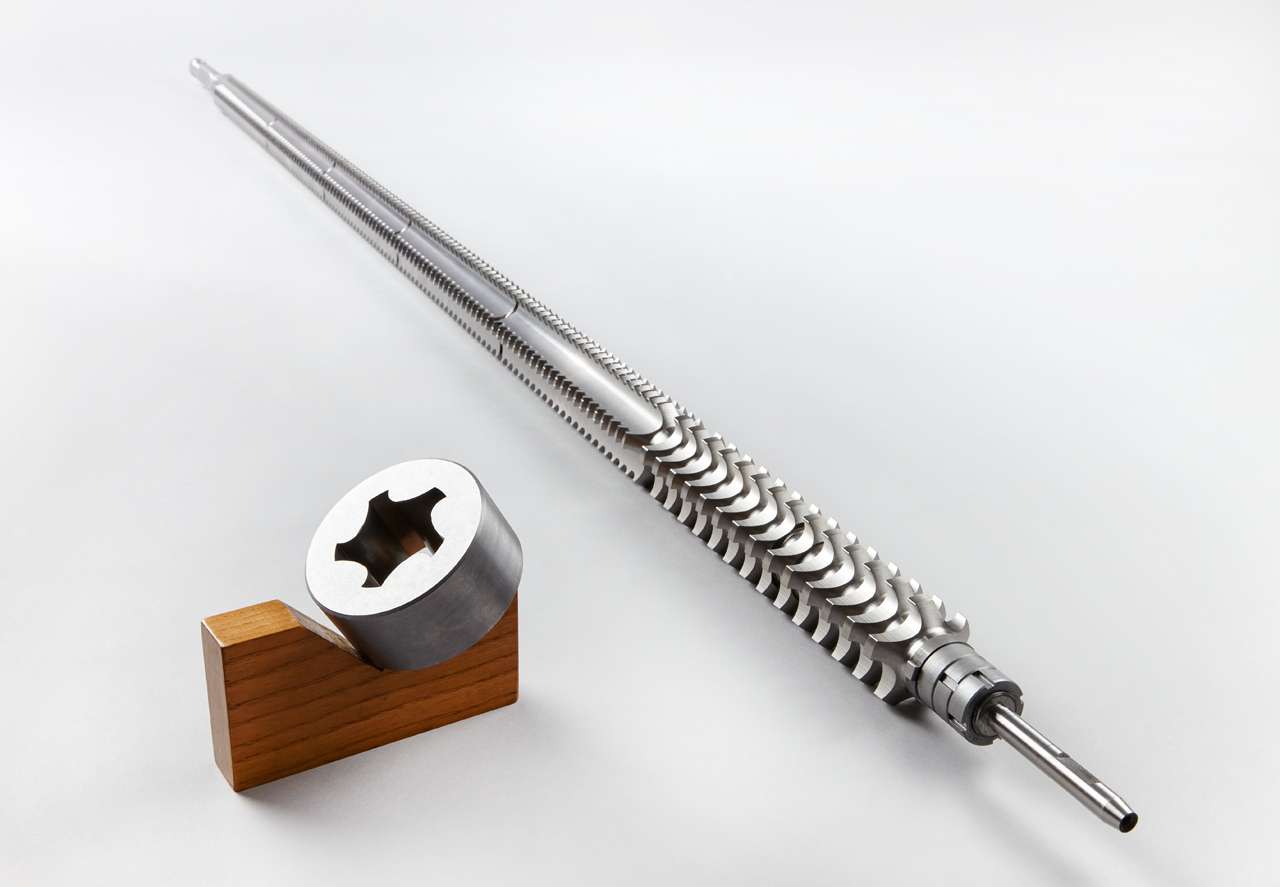
In the world of precision manufacturing, spline broaches play a critical yet often understated role. They create the internal or external grooves that allow components to transmit torque, align accurately, and operate smoothly in some of the most demanding mechanical assemblies. From automotive drivetrains to aircraft actuation systems and industrial gearboxes, spline broaches shape components that keep machines moving with dependable consistency. But not all spline broaches are the same. Each type is engineered for specific geometries, load requirements, and materials. Understanding what sets them apart—and how to choose the right one—can make the difference between flawless performance and costly production setbacks.
Understanding the Essential Role of Spline Broaches
Spline broaches are designed to cut multiple, evenly spaced grooves or teeth around a cylindrical form. These splines are essential for connecting shafts, gears, hubs, and mechanical components that must rotate together or transfer power without slipping. What makes broaching the preferred method is the combination of precision and repeatability it brings to the process. A single pass can produce highly accurate profiles that would require several machining stages using other methods.
For manufacturers, especially those working in high-volume or high-performance sectors, spline broaches offer not just accuracy but efficiency. Their controlled cutting sequence and uniform tooth geometry ensure that every spline is identical, which is crucial when parts must fit together with zero room for error. This makes spline broaches a fundamental tool in industries where reliability and safety are paramount.
Straight Sided Spline Broaches: The Classic Workhorse
One of the most common types of spline broaches is the straight-sided broach. As the name suggests, these broaches produce splines with parallel sides, making them ideal for applications where torque transfer must be smooth and predictable. Their simplicity does not diminish their importance—they are widely used in automotive hubs, agricultural machinery, and industrial equipment where robust, reliable connections are essential.
Straight-sided spline broaches work best when part geometry is straightforward and the load distribution remains consistent. Their design allows for clean chip evacuation and smooth cutting, which helps maintain long tool life and reduces the risk of dimensional drift over time. For manufacturers producing high volumes of similar parts, these broaches offer a dependable and cost-effective solution.
Involute Spline Broaches: Precision for High-Load Applications
Involute spline broaches take spline cutting to a more advanced level. Instead of parallel sides, involute splines are curved, following a specific mathematical profile similar to gear teeth. This design ensures that the contact between mating parts is smoother and more uniform, allowing them to handle higher loads and perform reliably under dynamic conditions.
These broaches are widely used in automotive transmissions, aerospace actuation systems, heavy equipment, and electric motor assemblies. When torque must be transferred smoothly even under shock loads or changing speeds, involute splines provide a significant advantage. They also help minimise wear on the mating components, which extends the service life of assemblies that undergo constant or fluctuating forces.
Choosing involute broaches is often a matter of necessity for projects where performance cannot be compromised. Their precision comes at a higher tooling cost, but the long-term benefits in durability and operational stability often justify the investment.
Serration Broaches: Ideal for Slip-Free Connections
Serration broaches are designed for cutting splines that resemble fine, closely spaced teeth. These splines are typically used in applications where a secure, non-slip connection is essential. The sharpness and density of the teeth create a strong mechanical grip, making these broaches ideal for clamping systems, steering components, and fastening applications where alignment must remain stable under vibration or repeated stress.
Because serrated profiles allow for excellent mechanical locking, they are commonly found in both automotive and aerospace safety-critical components. Their high precision ensures that installation and mating processes remain consistent across production batches, reducing the risk of loose fits or rotational slippage.
External Spline Broaches: Shaping the Outside of the Form
While many spline broaches work internally, external spline broaches shape the outside diameter of components. These tools are often used in combination with pot broaching systems where the broach is stationary and the workpiece is pulled through. External splines are essential for shafts, pins, and components that must engage precisely with internal mating parts.
External spline broaches are common in gear production, shaft alignment systems, and mechanical couplings. Their advantage lies in their ability to maintain concentricity and uniform tooth height across the entire profile, ensuring that parts assemble seamlessly and operate without imbalance.
How to Choose the Right Spline Broach
Selecting the right spline broach begins with a clear understanding of your application. Knowing the torque requirements, load conditions, operating environment, and mating components helps narrow down the type of spline needed. Material selection also matters—harder alloys may require broaches designed with reinforced cutting geometry or specialised coatings to resist wear.
Another critical consideration is production volume. High-volume operations benefit from broaches with long tool life and stable cutting performance, while low-volume or custom applications may require broaches tailored to unique geometries. Factors like tolerance requirements, surface finish expectations, and machine compatibility also influence the decision.
Spline broaches play a vital role in shaping components that must perform under demanding conditions. By understanding the differences among the primary types—straight-sided, involute, serrated, and external—manufacturers can choose the tool that aligns perfectly with their performance needs. When selected wisely, a spline broach becomes more than a cutting tool; it becomes a guarantee of reliability, efficiency, and long-term mechanical integrity.